The idea for “Creature Comforts” began on a visit to a pet shop with one of photographer Veega Tankun’s dogs. Among the supplies and animals, a box of grasshoppers caught her attention.
“They were there to be sold as food for spiders, and I became completely fascinated by them,” Tankun says. “It wasn’t necessarily the grasshoppers themselves, but their patterns, colors, and strange little forms. They felt almost surreal.”
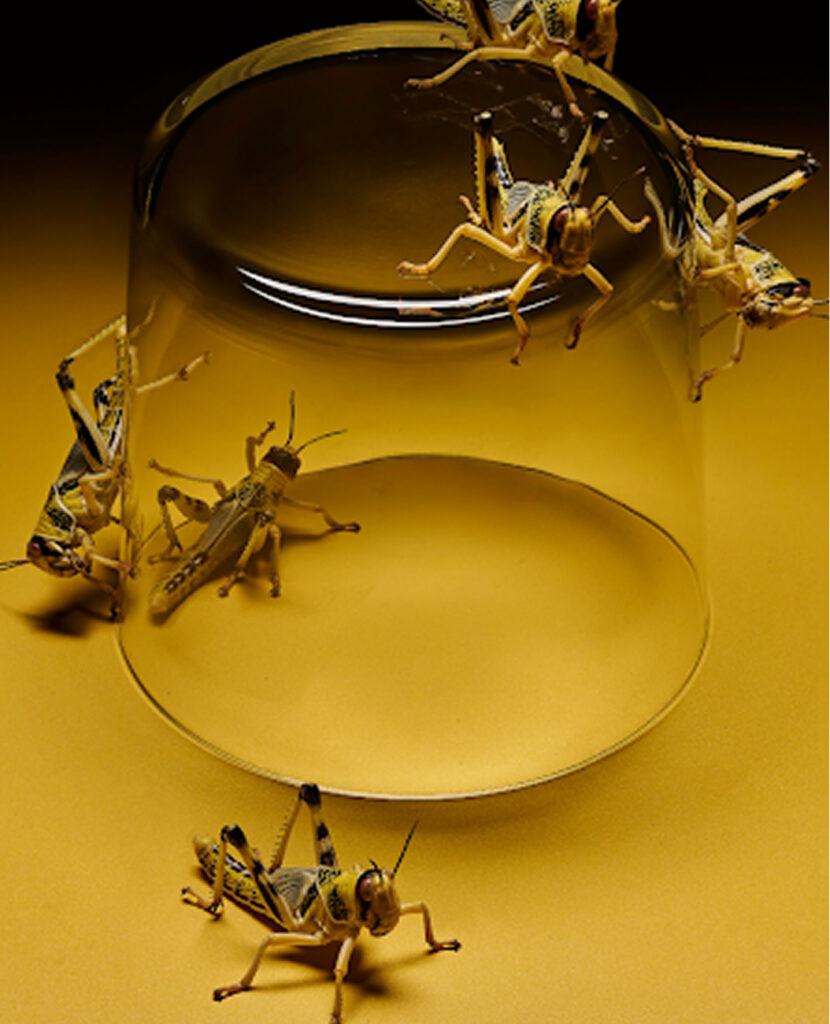
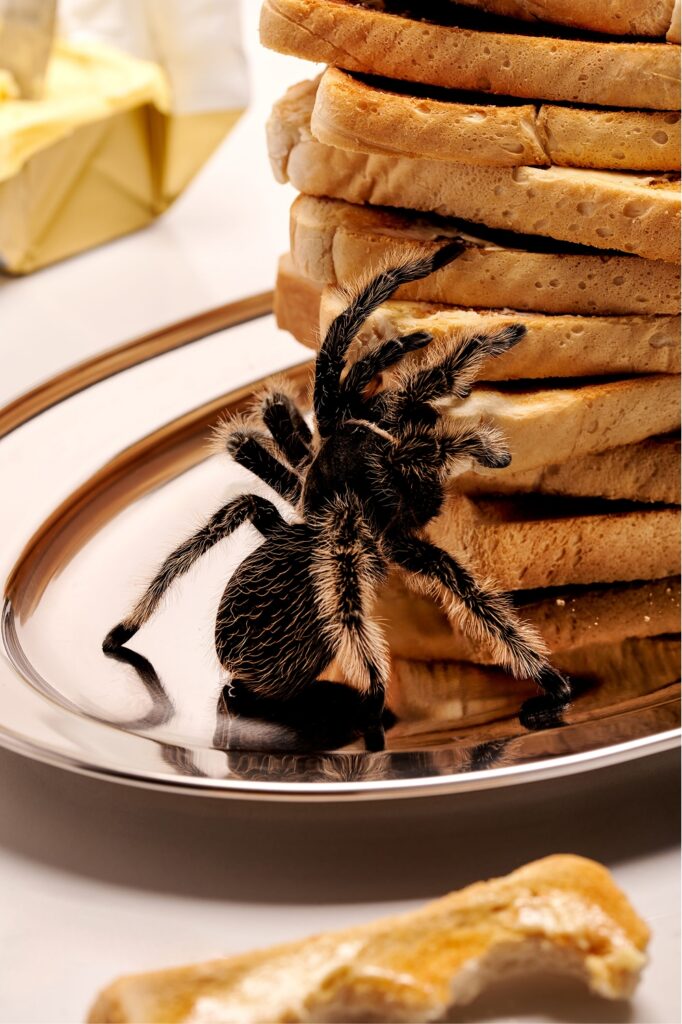
She kept thinking about them after she left, and what they might look like photographed outside their usual context. Tankun shared the idea with photography assistant Isabelle Rutland, and together, they started to explore what this idea could become.
There wasn’t an assignment to complete or a client to convince. This idea could become something bigger simply because she wanted to follow it. “The original idea was really just: I want to photograph these creatures,” Tankun says. “It was quite instinctive and visual rather than fully formed.”
RELATED READS: Charley Pangus on Owning Your Design Style
Developing the concept
As Tankun and Rutland researched the project, they spent more time studying insects and other small animals. The closer they looked, the more they noticed how graphic the creatures already were. “Their colors, textures, and patterns already feel designed,” Tankun says.
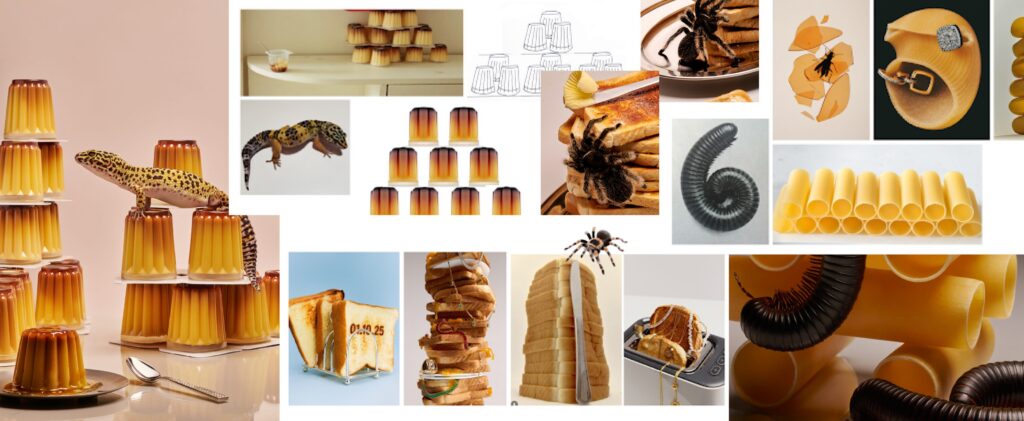
“There was no commercial brief attached to it. I didn’t have to make it make sense to a client. I could simply follow an idea because it interested me. That freedom was probably the most exciting part.”
Veega Tankun
That observation led Tankun to take a closer look at the visual language of beauty and jewelry photography. Small details and unusual forms are elevated and treated almost like precious objects. But photographing these creatures in that context wasn’t enough. Something was missing.
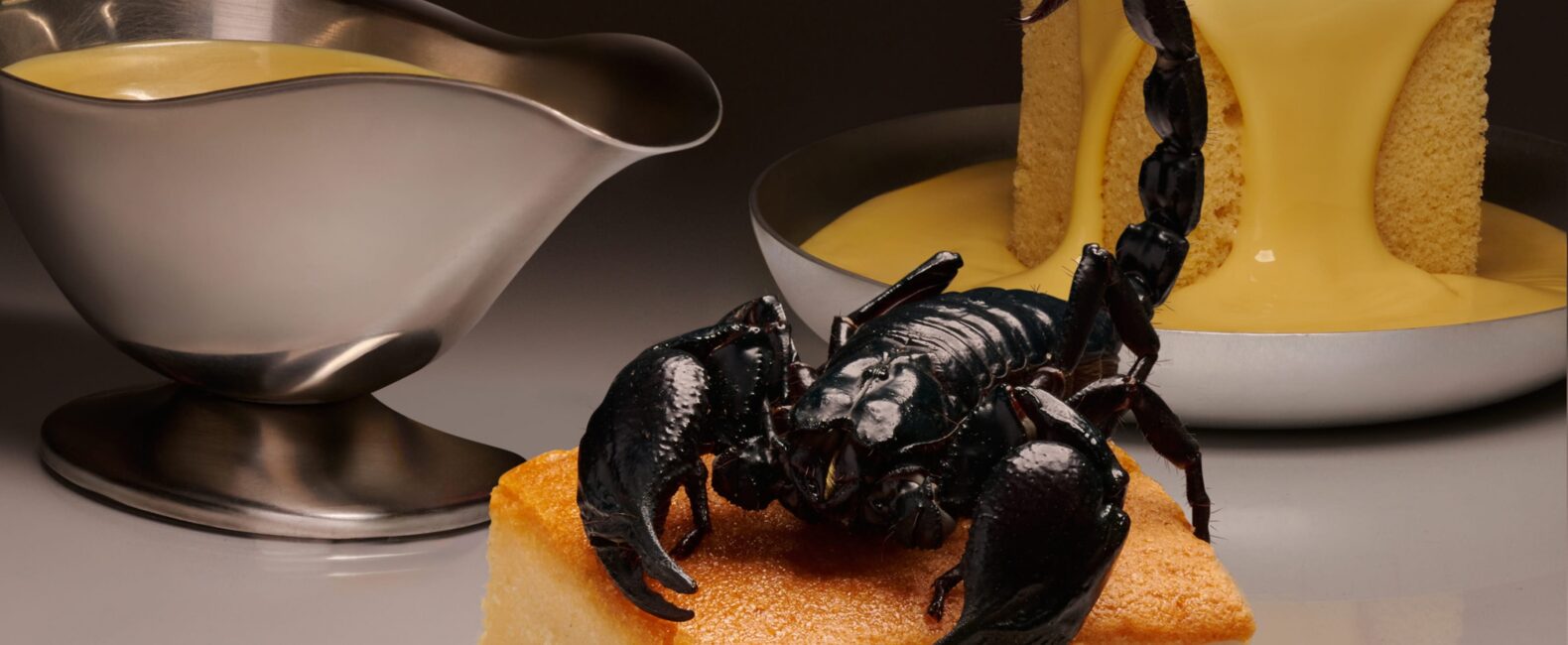
“That led us toward the idea of combining them with comfort foods,” Tankun says. “There’s something inherently funny and slightly surreal about putting two completely unrelated things together. We wanted the images to feel beautiful at first glance, and then make you do a double-take.”
Food gave the series the contrast it needed. It was familiar and comforting, while the creatures could feel strange, and even slightly unsettling. The project became less about documenting the animals and more about creating unexpected relationships between them and everyday objects.
“We started looking for combinations that felt visually interesting but also slightly wrong,” she says, “the kind of pairing that makes you curious about why you’re looking at it.”
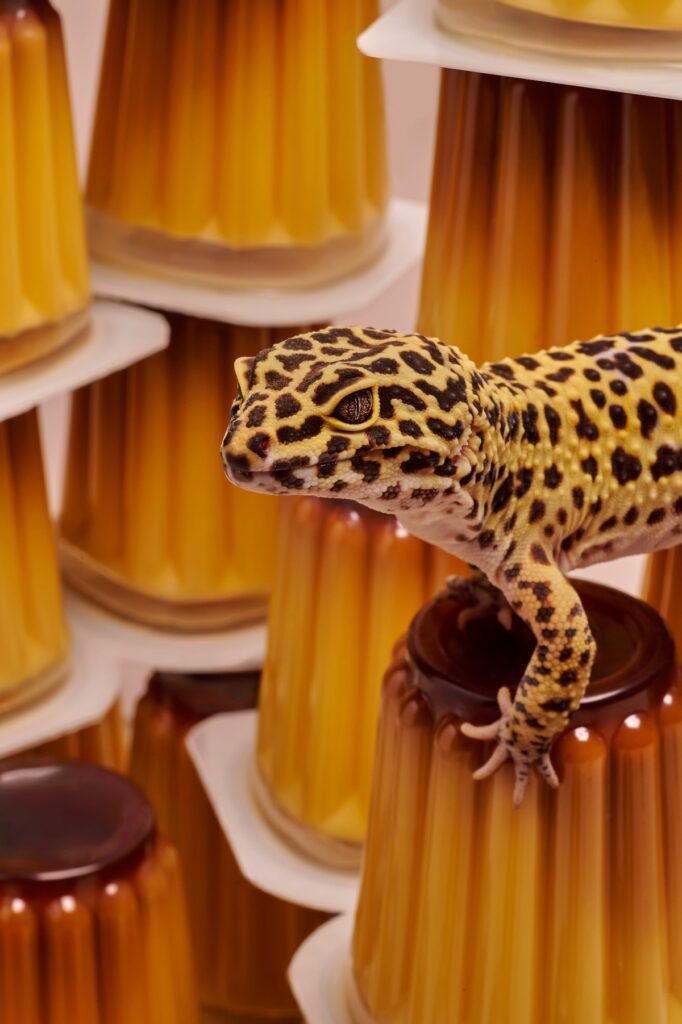
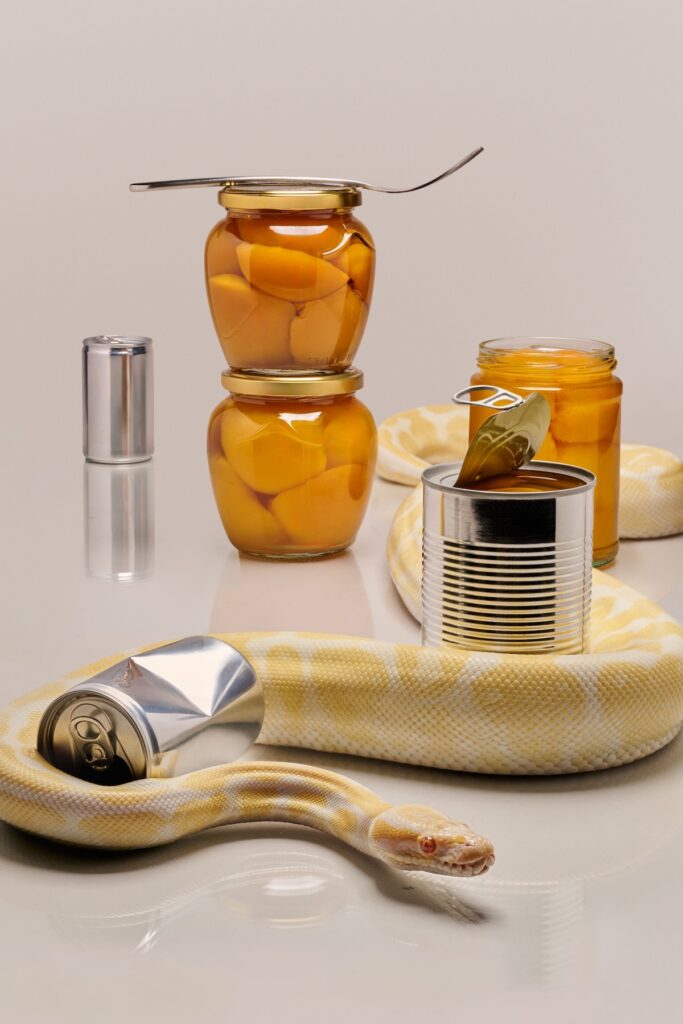
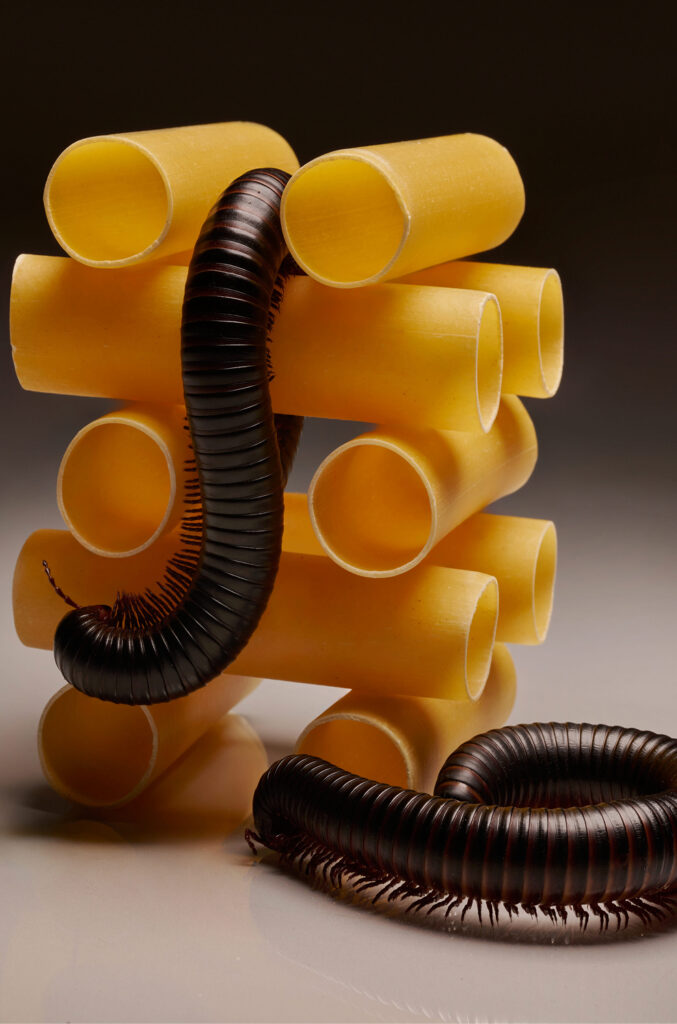
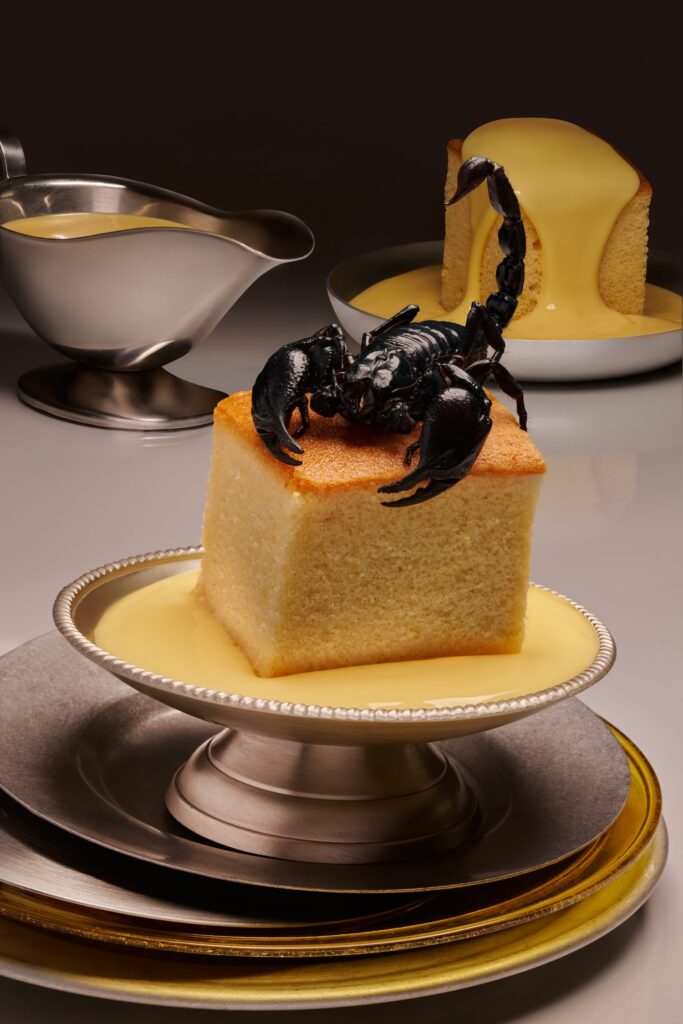
The result: grasshoppers with glossy gelatin, a leopard gecko with caramel puddings, a millipede with neatly stacked pasta, a tarantula with toast, and a python with tins of condensed milk. Each composition treats its subjects with the same polish you’d expect from a product image, but it preserves the humor and strangeness of the original idea.
RELATED READS: Everyday Inspiration with Allyssa Ellis
Planning for the unexpected
As founder and creative director of Veega Studio, Tankun is accustomed to developing visual concepts for brands. That experience shaped how she approached the project, even without a client attached.
“Working with brands has taught me to think quite deeply about an idea before I start making it,” she says. “You’re constantly asking questions like: What is the visual story? What makes it distinctive? How can an idea be communicated in one image? How can a collection of images feel like part of the same world?”
Tankun wanted “Creature Comforts” to have a clear visual language and a reason for existing beyond making a few beautiful photographs. But without a commercial problem to solve, she could let curiosity lead instead of strategy.
RELATED READS: Wieden+Kennedy CD Nik Reed on the Chemistry of Creativity
The team planned the concept and considered how the creatures and food might interact, while leaving enough space for the images to change on set. “I didn’t want to plan everything to the point where the images lost their sense of discovery,” Tankun says. “You need enough preparation to know what you’re trying to achieve, but enough space to notice something you weren’t expecting.”
And once the talent arrived on set, that flexibility was essential.
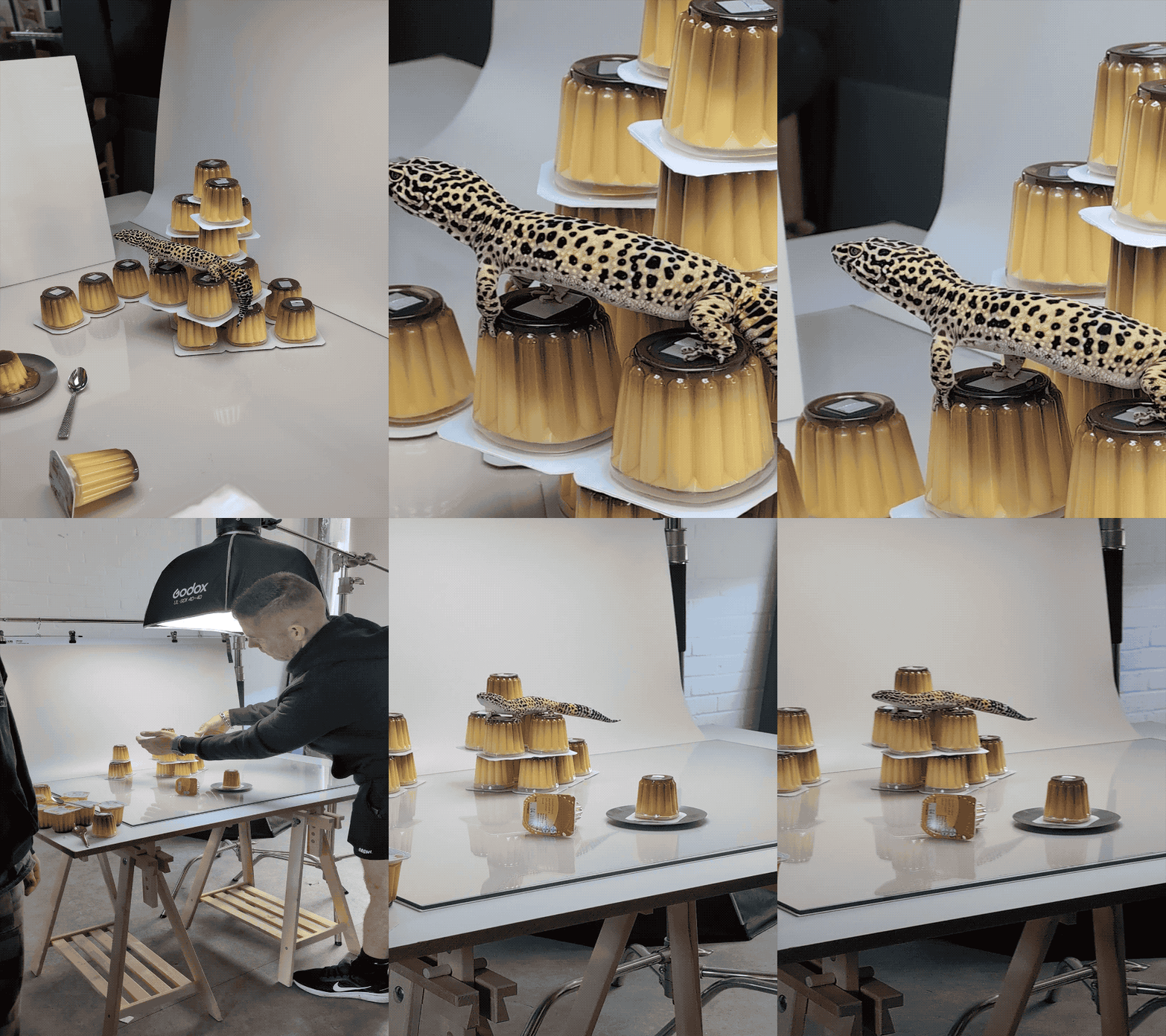
Tankun and the team worked closely with an animal handler, who shared facts that changed the way they saw some of the creatures. For example, the handler told them that scorpions are blind and deaf, despite often being presented as the villain. Learning more about each animal influenced how the team approached photographing it.
The animals’ welfare also determined the pace of the shoot. The team had a limited window to place each creature and try and idea before it needed a break. If a setup wasn’t working, they moved on rather than pushing for that planned, “perfect” shot.
“One of the interesting things about working with creatures is that they obviously don’t care about the shot list.”
Veega Tankun
“You can have an idea of exactly where you want something to be, but ultimately you’re working with something alive and unpredictable. That unpredictability became part of the process rather than something to fight against,” Tankun says. “It forced us to slow down, observe, and respond to what was actually happening in front of the camera.”
The shot that wasn’t on the list
The “just let it happen” approach resulted in Tankun’s favorite shot from the series. And like most happy accidents, it happened at the end of a very long day.
The team was working with Pixel, a white-and-yellow python, when they noticed how naturally she wanted to wrap herself around objects. “So we stacked tins of condensed milk and let her coil around them,” Tankun says. “It wasn’t planned; it came purely from observing her in the moment. That image ended up being my favorite from the whole series, and I think the strongest.”
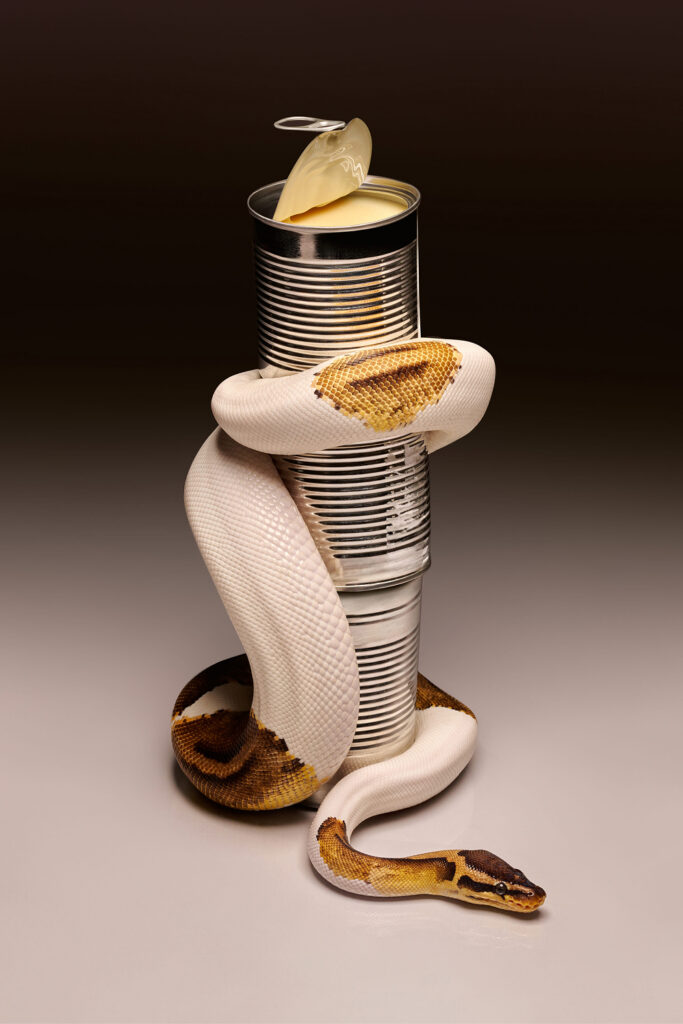
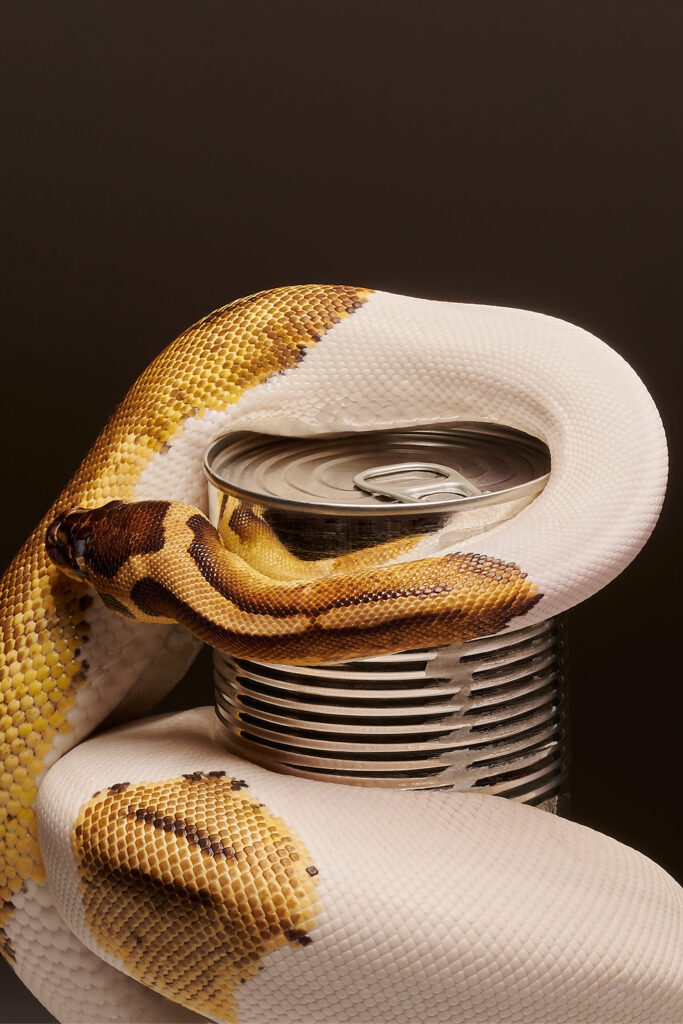
For Tankun, the photograph confirmed the value of leaving room for the idea to become something different from what she initially imagined. The unexpected moments and imperfections gave the images more energy than a composition directed down to the smallest detail.
The experience also reminded her that some of the strongest creative instincts begin with something unfinished and perhaps even irrational. Something that simply just caught her attention.
“The grasshoppers were such a small, random moment,” she says. “There was no obvious reason why I should have become so interested in them, but I followed that feeling. “Creature Comforts” reminded me that I don’t always need to know where an idea is going before I start exploring it.”
RELATED READS: Dan George Hill on Disrupting Your Own Creative Process
Creating simply to create
Tankun sees “Creature Comforts” as a reflection of the creativity she’s building and continuing to foster at Veega Studio. While the series may not necessarily be a direct representation of the studio’s commercial work, it reflects the curiosity and experimentation she wants the studio to keep at its core.
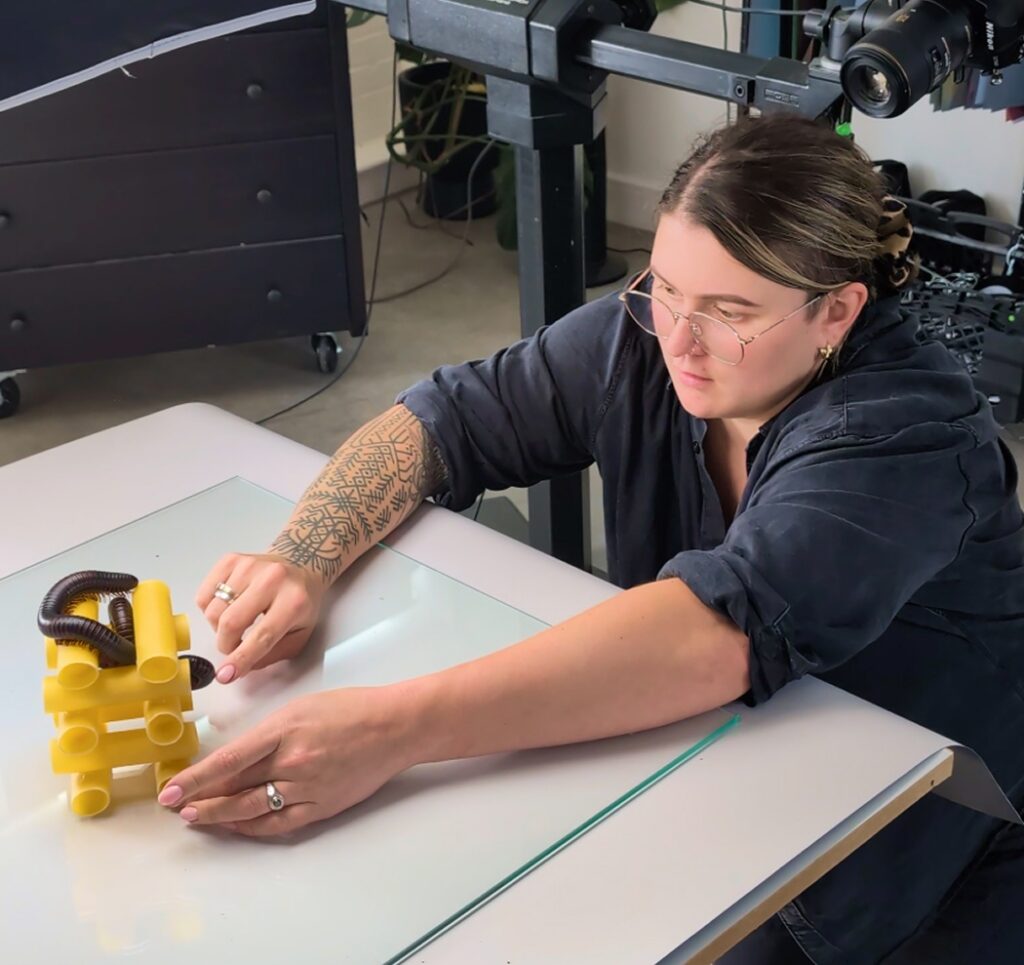
Personal objects create room to explore new techniques, visual languages, and ideas without a brief’s limitations. Some of those discoveries may eventually find their way into commissioned work, but for Tankun, the value begins with having the freedom to make them at all.
“There’s a different kind of energy when the only reason for making something is that you want to see what happens.”
Veega Tankun
Like many photographers and creatives, Tankun found that turning her passion into a career left less time to create solely for herself. “There’s a strange irony in turning something you love into your profession,” Tankun says. “You can spend so much time creating for other people that you forget what it feels like to create simply because you want to.”
Client work and personal work now serve different but connected purposes in her creative practice. One may provide more discipline, problem-solving skills, and experience developing an idea within a brief or timeline. The other makes more room for curiosity and experimentation. Together, they make the work stronger.
For Tankun, “Creature Comforts” marks the beginning of making that room again.
“Ultimately, ‘Creature Comforts’ is a reminder that I want to keep making things because they excite me,” she says. “Not because someone asked me to. Not because they need to sell something. Just because I had an idea and wanted to see where it could go.”
Explore and license imagery from “Creature Comforts” by Veega Tankun on Stills