Authentic imagery beats generic stock because it earns attention, builds trust over time, and keeps your brand from blending in with competitors running the same recycled visuals. Those payoffs come from where an image originates, and polish has very little to do with it.
So this article does four jobs. It defines what makes an image authentic and explains why that pays. Then it shows you how to tell authentic images from generic stock photos, and it answers the question everyone now asks about AI.
What makes an image authentic
“There’s a higher need for things to feel authentic and ‘real’ in the digital space as we move forward,” says Victoria Stefania, a visual trend researcher. The demand is clear, but the word itself rarely gets a definition.
Here is a working one. An authentic image is a photograph of something that happened, in a real place, made by a photographer with a point of view. It existed for its own reasons first and found a license afterward, while a generic stock image exists because a search term needed filling.
Four markers separate authentic photos from the rest:
- A real moment. Something was going on before the camera arrived, and it would have carried on without it.
- Particular people and places. You see a person instead of a type, and a room that shows signs of use.
- An author. One photographer’s eye shaped the frame, and you can find that same eye across their other work.
- Its own reason to exist. The image came out of a project, an assignment or a trip. We call it “not shot for stock.”
Two misreadings are worth clearing up. Authentic does not mean unplanned, because a directed portrait by a photographer with a point of view still qualifies. It does not mean rough either, since polish and authenticity sit together comfortably.
An authentic image still has to be right for your brand. We cover that second judgment in Finding Authentic, Non-Generic Imagery for Brand Advertising.
Why authentic images feel more realistic and relatable
Real scenes contain details nobody planned. There is a chipped mug on the desk, a coat on the back of a chair, and light coming from one window. Viewers read those details as evidence, and they recognize their own lives in them.
That recognition is what relatable means in practice. A viewer does not need to share the subject’s job or city, because a lived-in room is familiar to everyone. So the specific image ends up reaching more people than the one built to include them all.
Generic stock works by subtraction. Producers remove anything specific so the frame offends nobody and fits any brief. That is why “diverse team around a laptop” resembles no office you have ever worked in. Compare it with two particular colleagues in a particular studio, halfway through an argument about a layout.
One distinction matters for the rest of this article. Realistic describes how an image looks, and authentic describes where it came from. So an image can look entirely real and still have no origin at all.

How authentic imagery wins
A definition only helps if the thing it defines pays off. Authentic imagery pays in three ways, and each one has a mechanism behind it.
It earns attention
People have learned to skip filler. Jakob Nielsen’s eyetracking research for the Nielsen Norman Group, published in 2010, found that users ignore decorative photos and study photos of real people and real things. On one company site, portraits of actual employees drew about 10% more viewing time than the biographies printed beside them.
The same research offers a blunt contrast. Visitors to a university application page skipped a large photograph entirely, because it told them nothing they needed to know.
That study looked at web pages, and it is sixteen years old. Even so, the principle has held up, and it suggests the same behavior carries into a feed. An image stops the scroll when it carries something worth looking at, but a placeholder gives the thumb no reason to pause.
It builds trust
Getty Images surveyed more than 30,000 adults across 25 countries between July 2022 and September 2023. In that research, 98% of consumers agreed that authentic images and video are pivotal to establishing trust.
Treat that number as an expectation, because it records what people say and not what they do. Trust builds across many exposures to a brand that keeps showing real people and real places, so one photograph will not create it.
Picture a clinic, a bank or a software company asking for your details. If the people on the page look like they came with the template, then the promise next to them reads like it came with the template too.
Seen from the other side, the argument gets stronger. A visibly generic image tells the viewer that the brand never looked closely at its own customers.
It keeps you from blending in
Think back to the woman on two websites. Large libraries license generic stock to anyone who pays, so category leaders and their smallest competitors end up drawing on the same pool.
That sameness has a cost you will never see on an invoice. You pay for the media slot either way, and a shared image spends it reminding people of the category instead of your brand.
Distinct imagery compounds instead. By the tenth image in a consistent, authored style, people start to recognize your brand before they see the logo.
“Images can cement a brand or message in culture in a way nothing else can,” says Jessica Walsh, founder of &Walsh.
And when a hero image has to stay yours alone, exclusivity is an option. We explain how it works in Where to License Authentic Commercial Photos.
How to tell authentic imagery apart from generic stock
All three wins depend on recognizing the real thing when it is in front of you. Looking for a style is the unreliable way to do that, because anyone can copy a look. The reliable signals are about origin, so comparing authentic vs generic stock images comes down to six questions.
| Generic stock | Authentic imagery | |
|---|---|---|
| Why it was made | To match a search term | A photographer pursuing a subject, project, or assignment |
| What is happening | A concept acted out: teamwork, success, wellness | A moment you can describe in a specific sentence |
| Who is in it | Types cast to represent everyone | Particular people absorbed in what they are doing |
| Where it is | A blank or anywhere setting | A real place with signs of use |
| Who made it | A contributor you cannot easily trace | A named photographer with a body of work |
| Where else it appears | Anywhere, including your competitors | Limited circulation, with exclusivity possible |
Read the table from the top down, because the first row explains the other five. An image made to match a search term needs types instead of people, an anywhere setting, and a concept simple enough to tag. Authentic work reverses each of those choices.
You will rarely know for certain why someone made a picture. Even so, rows two to six are evidence you can see or look up, and they tend to agree with each other.
Three checks that take a minute
Some frames sit between the two columns. When the table does not settle it, three quick checks will.
- The detail check. Find one thing in the frame that nobody would have planned. If every element looks placed, then someone placed it.
- The author check. Click through to the person who made the image. A named photographer whose other work shares a sensibility is the strongest single signal you can get, and on Stills every image leads to an artist page.
- The mileage check. Before you commit to a hero image, run a reverse image search and see where else it already lives.
“I like how curated the selection is on Stills,” says Ethan Tran, a designer. “It’s photo licensing that puts amazing photographers at the forefront. I love how you’re able to see the person behind the photos within the platform.”
One caution before you rely on your eye alone. Candid and raw are styles, and anyone can fake a style, which is a trap we cover here. An image that passes all three checks is authentic, but whether it suits your brand is a separate question. The swap test in that same article answers it.
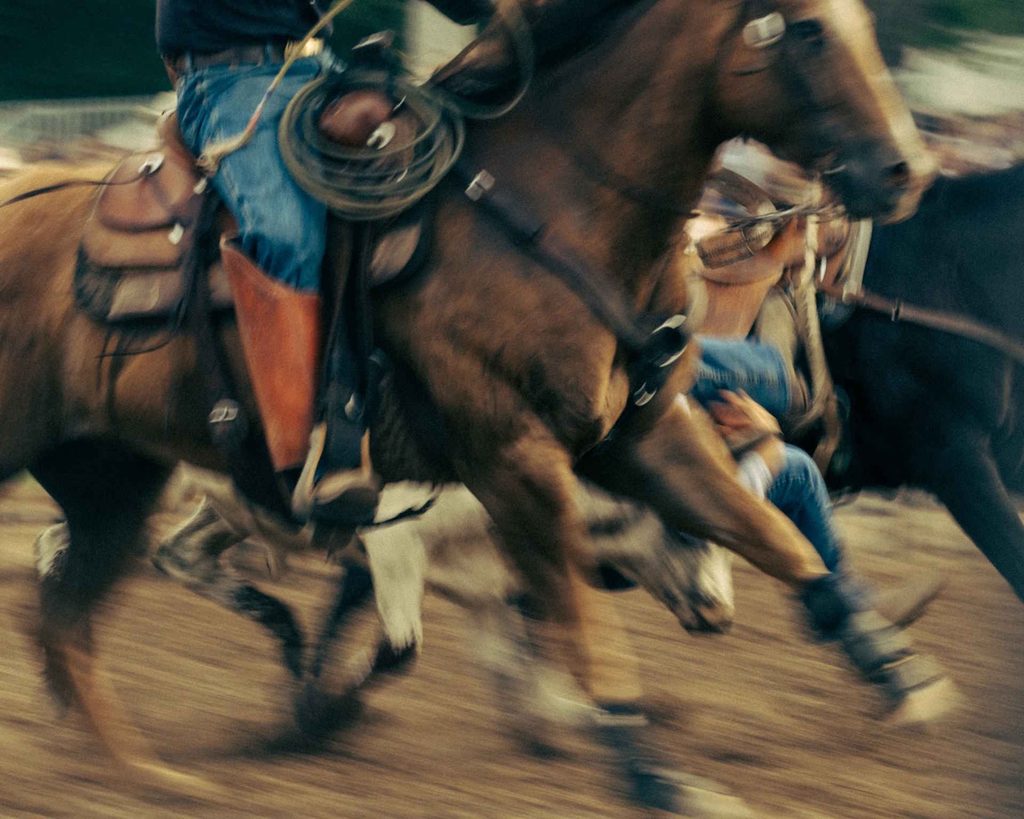
Authentic stock images are not a contradiction
The checks point somewhere readers do not always expect. “Stock” describes how you license an image: it already exists, and you pay to use it. “Generic” describes how someone made it.
The two words fused because the largest libraries fill up with images produced against keyword demand. A licensed image can still be fully authentic when it began as a photographer’s own work. That is the model behind a curated, represented roster like the one at Stills.
On a platform built that way, photographers apply for representation instead of uploading freely. So the pictures you browse already existed as someone’s project, and the license came second.
“Stills is great because it is a well-curated collection of high-quality photos,” says Kirsten Holland, a designer and illustrator. “They don’t feel like generic stock images and have a lot of personality.”
What about AI-generated images
By the definition in this article, an AI-generated image can be realistic, but it cannot be authentic. Nothing happened, nobody was there, and no one saw it.
The look is another matter, and it deserves an honest answer. In August 2026 the Nielsen Norman Group showed 77 US adults a fictional company’s webpage for ten seconds. Pages with undisclosed AI hero images scored slightly higher than pages with stock photos. The authors caution that the sample was small and covered a single industry, and we walk through the details in this article.
A second finding matters more here. When participants suspected AI, their ratings fell. Getty’s research points the same way, because 76% of consumers say they are reaching the point where they cannot tell whether an image is real. Nearly 90% want to know when an image is AI-generated.
So the exposure comes at the moment your audience finds out. AI has sensible jobs in concepting, comps and abstract illustration. The trouble starts when a brand uses it to depict people, places and experiences it is asking customers to believe in.
As creative director David Stevanov puts it, “with AI being all the rage, it’s even more important to recommend images that feel human to brands.”
Where this leaves you
An image can look real without being authentic. Authenticity comes from a moment that happened, a place that exists, and a person behind the camera. So start small on Monday. Run the three checks on your current homepage hero and see what comes back.
And when you want work that was never shot for stock, browse the Stills catalog.
Frequently asked questions
Yes. Direction from a photographer with a point of view counts as authorship, so a planned portrait or a styled scene can be fully authentic. The failure is a scene built to illustrate a keyword with interchangeable people, because nothing in it belongs to anyone in particular. So ask who directed the picture and why, and the answer usually settles it.
Realistic describes appearance, and authentic describes origin. Generic stock and AI-generated images can both look realistic. Only a photograph of something that happened, made by a person who was there, can be authentic. The difference matters when your audience asks who took the picture, since a realistic image may have no answer.
Yes, because stock is a licensing model and not a visual style. An image made as a photographer’s own work and licensed afterward is both stock and authentic. Stock turns generic when someone produces it to satisfy a search term. Look for libraries that represent photographers and show you each artist’s wider body of work.
No, as long as the edit leaves the event alone. Color grading, cropping and cleanup do not change what happened in front of the camera. Adding or removing people, places or events does, and at that point you are describing a different picture. A light, consistent grade across a campaign is normal practice and takes nothing away.
Featured image by Grant Puckett