The creative brief is good, the deadline is close, and you have been inside a search interface for two days looking for one photograph that does not look like a photograph everyone else has already used. You find something that technically fits. But the photo you found could also sit on a bank’s homepage, a software company’s careers page, or a dental practice’s about section, and nobody would notice the difference.
Better search terms would not have saved you. The problem started earlier, when you chose where to look.
Deciding where to license authentic commercial photos sets two things at once: (1) the ceiling on how distinctive your imagery can be, and (2) how precisely you can define the rights you walk away with. Both come down to one question. Were the images in front of you made as real creative work, or manufactured to satisfy a search term?
“Stock photography is so often associated with being bad,” says Nik Reed, Creative Director at Wieden+Kennedy. “But when you have a resource like Stills, it can actually change and elevate the campaign beyond what it normally would be.”
Two ways a photograph ends up in a library
There are broadly two models in commercial image licensing, and they produce different results for reasons that have nothing to do with taste.
The first model produces against demand. A concept is popular, so images get made to match it. Here the output is broad, and for any idea you can name, something exists. It also converges, because everyone aiming at the same concept ends up in the same place.
The second model represents work that already existed. A photographer shot something because they wanted to, on assignment or as personal work, and the platform curates it and clears it for commercial use afterward. The photograph carries a point of view, because someone had one before licensing entered the picture.
Stills runs on the second model and says so directly. The collection is not shot for stock. Represented artists make the work as genuine creative work, and it gets curated and pre-cleared for commercial licensing after the fact.
That distinction matters most when the image is doing real work. Matthew Low, SVP and Creative Director at BBDO, puts the stakes plainly: “With the rise of AI and MidJourney, it’s also easier than ever for people to generate images on their own, so having a company like Stills is really important to continue giving real photographers a voice.”
You can tell which model a platform runs on before you spend an hour inside it. Look for the photographer. If you can open an artist’s page and see a recognizable body of work, you are looking at represented creative work. If every frame is anonymous and self-contained, you are looking at production.
Match the source to the job
A lot of sourcing frustration comes from asking one library to do four different jobs. The jobs are genuinely different, and they reward different licensing models.
| The job | What matters most | Licensing model that fits |
|---|---|---|
| The campaign hero | Distinction, exclusivity, control over where and how long it runs | Rights-managed |
| A brand system across many placements | Consistency, full shoots, repeat access to one artist | Rights-managed or curated licensing |
| Ongoing social and content volume | Freshness and throughput | Subscription or membership |
| General coverage | Breadth and speed | Broad royalty-free |
Two terms worth defining once. Royalty-free gives you broad default permissions without a per-use fee, but with fewer specifics named. Rights-managed means the license spells out the particulars: the project, the media, the usage type, the territory, the duration, the distribution level, and the client.
At the top of a campaign, that specificity is the whole point. You know what you bought, where it can run, and who else cannot have it.
Jessica Walsh, founder of &Walsh, explains why the hero image earns the budget it gets: “The difference between memorable and forgettable imagery is often whether your image is following a trend, or setting one. Great imagery is ownable and distinct.“
Here is where that choice actually bites.

“Everything I find looks like everyone else’s homepage”
This is the dilemma that sends people looking for a new source, and it starts with the catalog, not the search box.
Stills is built around a hand-picked roster. Photographers apply for representation instead of uploading freely, which changes what you are filtering through. You are not separating signal from volume, because the gate sits at the front and the curation has already happened by the time you arrive.
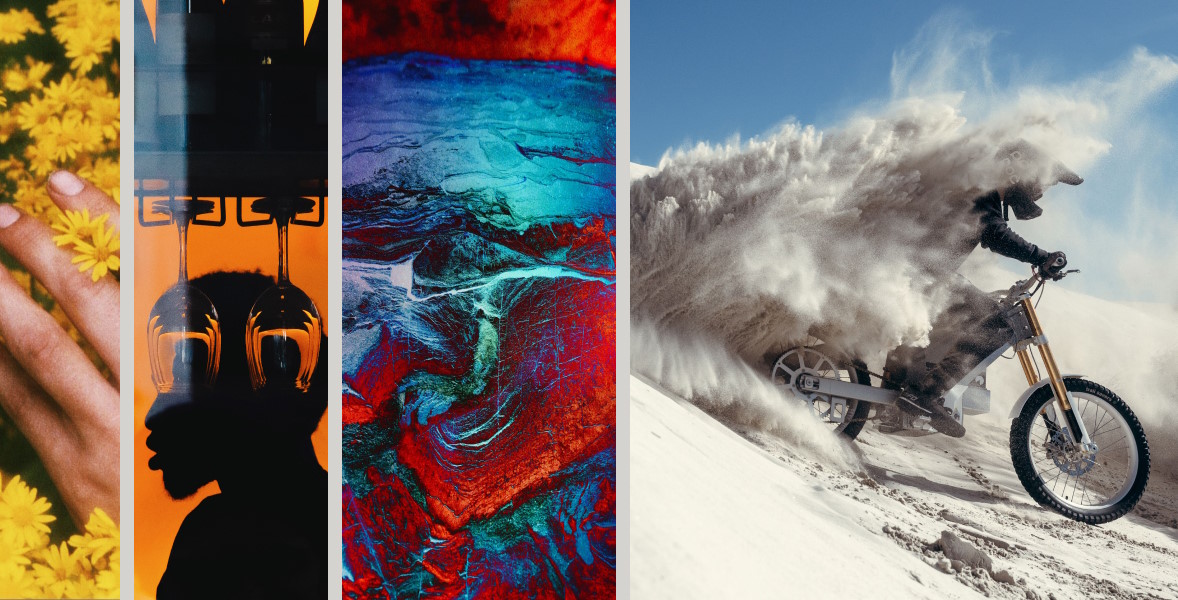
The roster is international, with artists working in London, Los Angeles, Paris, Toronto, Brooklyn and beyond. That gives you real range in location, light, and cultural specificity. Josua Stäbler works in analog film, Lauren Withrow in cinematic fashion, Lindsey Swedick in product and food, Nolis Anderson in portraiture. Each brings a distinct sensibility to a brief.
The categories run wider than people expect, from aerial views to food and beverage, science fiction to religion and worship. Breadth on its own is not the point. What matters is that a curated collection can still cover a real brief without falling back on the obvious version of the subject.
There is a commercial argument here beyond aesthetics. An image that could belong to any brand is doing no work for yours.
Reach for Stills when photography is carrying the campaign instead of decorating it. It is strongest in fashion, travel, automotive, lifestyle, and culture work, which is part of why teams at Google, Apple, BMW, and L’Oréal license through it, alongside agencies including TBWA, Ogilvy, and McCann.
“I need to know exactly where I can run this”
You found the shot. Now someone in business affairs wants to know what you actually bought, and “it’s licensed” is not an answer.
This is where rights-managed licensing earns its reputation with the people who sign off on spend. A Stills license names the specifics: the project, the approved media, the usage type, the territory, the duration, the distribution level, and the client. Nothing is left to interpretation, so nothing has to be re-litigated in six weeks.
Imagery on the platform is fully released for advertising and pre-cleared, ready to license. In practice, the release work is finished before you get there. You are not chasing a photographer for a model release two days before launch, and you are not guessing whether the person in the frame consented to a commercial context.
Reach for it when the rights need to be specific and provable, not simply present. That covers anything running in paid media, out of home, packaging, or broadcast, and anything a client will need documented later.
“A competitor could license the same image tomorrow”
With most royalty-free licensing, this risk is structural. Broad permissions and unlimited licensing are the product, so exclusivity is not on the menu.
We at Stills handle it differently. Popular images carry a limited number of licenses, so the same photograph is not running across multiple campaigns at once. Where a campaign needs more certainty than that, a Market Freeze reserves exclusive use of specific images for a defined period.
If you have ever watched a competitor launch with the frame you shortlisted, you already know what this is worth. Exclusivity at the hero tier is not vanity, it is the line between imagery that belongs to your brand and imagery you happen to be renting at the same time as someone else.
Reach for it when competitor duplication would undermine the campaign, or when a client is investing enough in one image that it needs to stay theirs for the flight.

“I need forty images that look like they belong together”
A campaign that holds together across a site, a paid social run, and a print piece is not forty good images. It is forty images with the same light, the same wardrobe logic, and the same tone.
Single-image searching cannot get you there, because it produces a collage. What works is finding one frame you like and then going to the artist behind it, where the rest of the sensibility lives. Stills is built for that, and every image traces back to a named artist whose full body of work you can browse.
Elliot Ulm, a graphic designer, describes the difference: “I love how collaborative Stills feels! I never liked using stock imagery from other sites as there was never any context to the images I was using. Being able to see individual photographers’ body of work on Stills makes using their images so much more enjoyable. It feels like you’re supporting a fellow artist.”
The filters are built for design decisions. You can narrow by category, artist, composition, orientation, color palette, location, season, and time of day. Jack Chitty, a graphic designer, singles out one of them: “My favorite feature on Stills is the ability to search by color code. It’s a great way to keep some imagery on-brand and complement an identity.”
That solves a real constraint. Holding a brand palette across licensed imagery is difficult when your only tool is a keyword box.
Alec Ploof, Head of Growth at Moment, describes the commercial payoff: “Having the right images made the site feel coherent. It got more customers into our gift guides and sale collections than ever before.“
Reach for it when you are building a system and not filling a single slot.
“The client has to approve it before I can license it”
Every agency knows this loop. You cannot buy the image until the client signs off, and the client cannot judge the image with a watermark across the middle of it.
Stills allows you to download unwatermarked comps, so you can drop the real image into a finished layout and present it the way it will actually run. That is also when the useful problems surface: a crop that fights the headline, a composition that collapses on mobile, a tone that goes wrong next to the logo.
Boards handle the rest of the loop. They work as shared mood boards for collecting options, collaborating with your team in real time, and presenting a direction to a client without emailing a folder of JPEGs.
For teams licensing regularly, there are agency rates with customizable set pricing, plus a dedicated team for enterprise questions and fast turnarounds.
Reach for it when the approval process is part of the job, which for most agency work it is.
“This one has to actually be ours”
Licensing has a hard limit, and it is worth naming plainly.
Anything that has to be specifically yours cannot be licensed. Your team, your space, your product, your process, your customers, and your leadership all have to be shot. Those are also the pages where audiences look hardest, so a substitute gets noticed.
The answer is rarely all or nothing. The working model is hybrid. You commission where specificity is non-negotiable and license where you need theme, mood, and campaign volume, so the budget lands where the audience is paying the most attention.
Jessica Walsh describes the same approach from inside an agency: “Sometimes our client’s budget is too tight for entirely custom photoshoots. So with this collection, we can share a mix of licensable assets that can work alongside our custom shoot to save our client some money.”
An about page and a careers page shot custom, with the campaign’s atmosphere and thematic imagery licensed, gives you one visual language on one budget.
Confirm these before you publish
This list applies to any image from any source. Run it before anything goes live.
- Commercial classification. The asset must permit commercial use. Editorial content cannot advertise a product, and a bigger license does not change that.
- Release scope. Every recognizable person needs appropriate consent, and a release is not blanket permission. Sensitive contexts often need additional approval. Never imply a model personally uses your product.
- Right of publicity. In the US this is state law and it varies. A use that implies endorsement is a different question from a use that simply depicts someone.
- Property and trademark. Check visible logos, artwork, packaging, buildings, vehicle designs, and clothing graphics. Cropping a logo solves a composition problem, not a rights problem.
- Distribution limits. Confirm print quantities, projected audiences, and whether out of home, broadcast, and packaging are included.
- Merchandise. Advertising rights and merchandise rights are separate. Anything for resale usually needs enhanced licensing.
- Client transfer. If you are an agency, confirm whether the client receives continuing rights or whether the license stays with you.
- Team access. Single-user plans do not cover shared libraries. Buy at the level your team actually operates.
- Exclusivity. If a competitor running the same image is a real risk, confirm what your license does about it.
- Human authorship. Confirm whether generative tools were involved. Policies differ across platforms. If provenance cannot be documented, treat that as a stop and not an assumption.
- Indemnification. Confirm what your license includes and what it covers, in writing, for anything high exposure.
- Documentation. Keep a rights packet: invoice, license agreement, asset ID, photographer, release status, purchase date, project, client, approved usage, and final artwork. Terms change, and your records prove what you bought.
Hayden Everitt, a graphic designer, points out that rights hygiene is about more than liability: “Ensuring photographers are compensated and recognized is an important cause, especially when using their creative vision and imagery for your projects.”
Where this leaves you
You cannot search your way to authentic imagery if the image library you are searching was never built from authored work. Where you look decides what you find, and it decides what rights you can hold when the campaign expands, the client asks, or a competitor gets close.
Match the source to the job. Spend seriously where distinction pays for itself. Commission where the subject has to be specifically yours.
When the image is the campaign, browse the Stills catalog or reach out to us directly and we will help you find it.
Frequently asked questions
Royalty-free grants broad default permissions without a per-use fee, with fewer specifics named in the license. Rights-managed defines the project, media, usage type, territory, duration, distribution, and client, which gives you control over exactly those variables, including exclusivity. Neither is better in the abstract. They suit different tiers of work.
Standard royalty-free licensing rarely offers exclusivity, because unlimited licensing is the product. Rights-managed licensing is the model that addresses it. On Stills, popular images carry a limited number of licenses, and a Market Freeze reserves exclusive use of specific images for a defined period.
It means the release and clearance work is completed before the image is offered for license, so the permissions questions are settled and do not become your research project. You should still confirm that the license scope matches your specific intended use, as you would with any license.
Sometimes, but the burden of confirming releases sits with you. Some free libraries state directly that they cannot verify every uploaded release, and a CC0 dedication covers copyright without resolving privacy, publicity, trademark, or property rights. Confirm release status before anything paid.
It depends on what has to be specifically yours. Licensing is more efficient for theme, mood, and campaign volume. Commissioning is the only option for your actual people, product, and space. Many teams do both and put the shoot budget where the audience looks hardest.
It varies by source and by plan. Some require an agency-level plan for transfer, others permit a limited number of assignments. It’s a good idea to confirm before the license is purchased, not after the client asks.
Featured image by Matt Robson